The tech job market is brutal right now. Friends of mine, smart people with solid resumes, can’t find work. The ones still at FAANG haven’t gotten raises in three years. Every quarter they wait for layoffs. Their managers disappear into rooms to figure out how to save themselves. Some have been there for decades, and there’s no psychological safety left. Others on the outside are taking salaries at half what they earned before. $160k roles now paying $80k, if you can get them at all.
After getting burned by seven-round interviews that lead nowhere, some have given up. They’re turning to sports gambling, prediction markets like Kalshi and Polymarket, options trading. A few have asked me about flexible side income, something they can do from home without a car.
AI companies need humans. The models don’t train themselves. Someone has to rate which response is better, write prompts that push the model’s limits, and flag answers that are wrong or harmful.
The technical term is RLHF, which stands for Reinforcement Learning from Human Feedback. It’s how companies like OpenAI and Anthropic fine-tune their models. You rank responses, and your preferences shape how the AI behaves. More broadly, this falls under “human-in-the-loop” work, which includes data annotation, labeling, and quality evaluation.
These are remote AI training jobs. Work from home, set your own hours, get paid to make AI smarter. The catch: pay varies wildly, the work can be tedious, and getting onto the good projects takes time.
Here’s what’s out there.
The higher-paying platforms
Alignerr
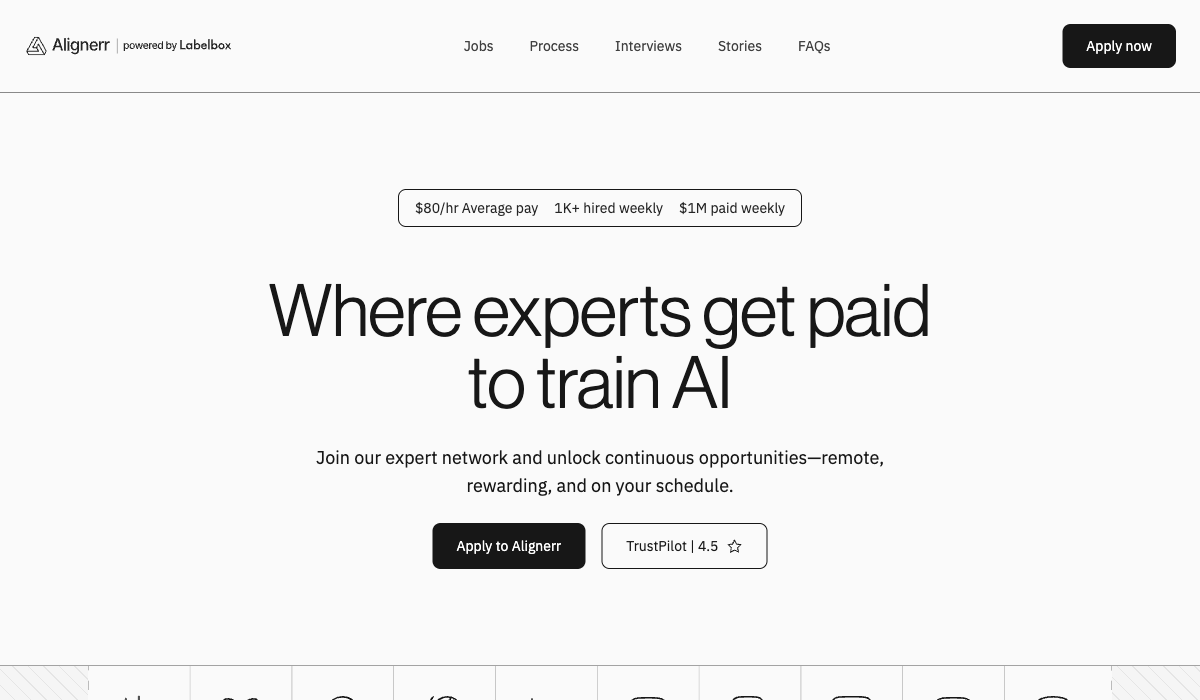
They advertise “up to $150/hr.” That ceiling exists, but you won’t hit it on day one. The top rates go to advanced coding tasks or complex evaluation work—the kind where you write an intricate prompt, grade the model’s response, create a detailed rubric for how it should have responded, then rewrite the response yourself.
It’s mentally exhausting. You earn those dollars.
Mercor
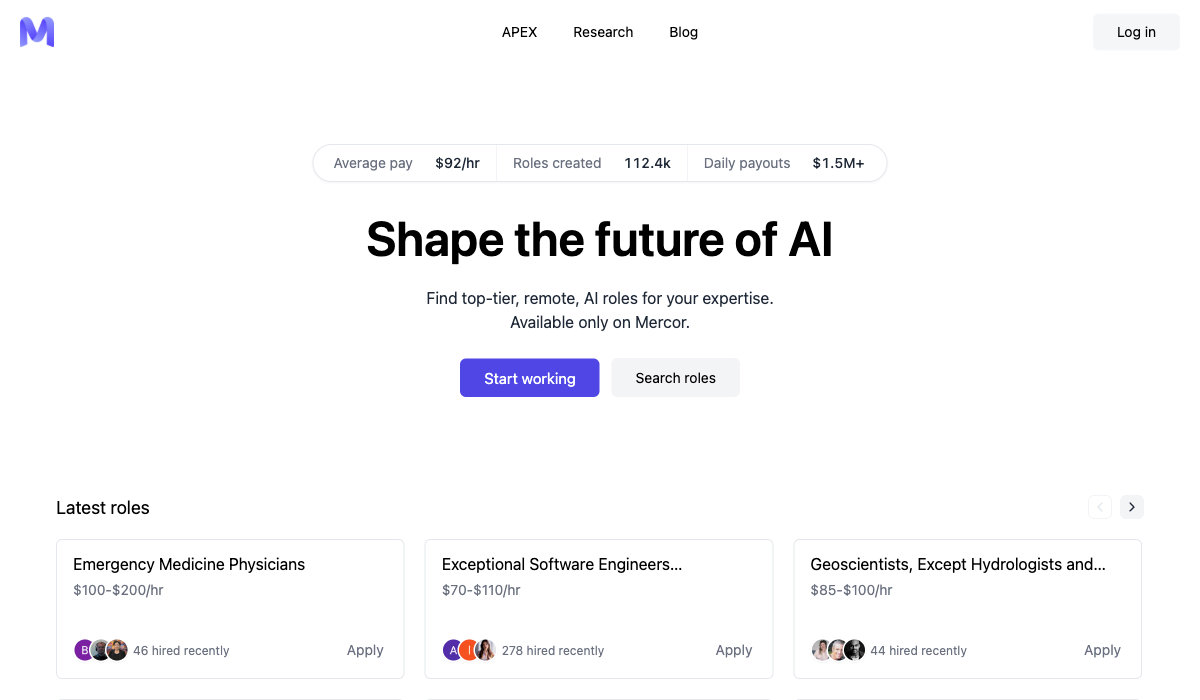
Claims rates up to $65/hr. Uses an AI interview process to screen candidates, which feels fitting given the work.
A friend signed up and tried a few tasks—scoring responses based on detailed rubrics. He found it draining. After a handful of tasks, he decided the mental effort wasn’t worth the payout. Your mileage may vary, but go in with realistic expectations.
Data Annotation Tech
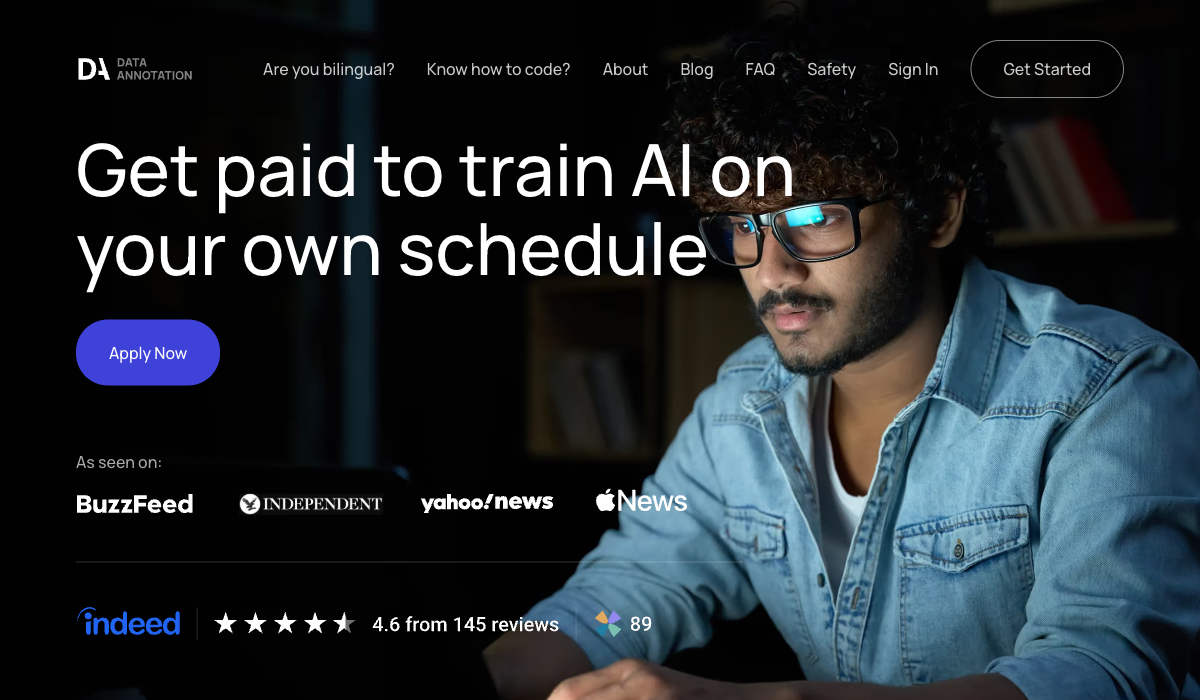
The most established name in this space. Basic tasks pay around $23/hr. Finance and coding work bumps you to $40/hr, sometimes with an extra dollar or two for priority jobs.
Popularity is both a blessing and a curse. The platform is reliable and pays on time. But it’s gotten harder to get accepted. Apply early.
Mid-tier options
Stellar
Starting rate around $25/hr. Reviews are decent. Keep this one in your back pocket if the higher-paying platforms don’t work out.
Micro1
Less information available. Worth exploring if you’re building out a portfolio of platforms.
The rest
Outlier
Mixed reviews. Proceed with caution.
Remotasks
I saw their dashboard in a New York Times piece on AI workers. Lots of image annotation work—labeling objects, drawing bounding boxes, that sort of thing.

TELUS Digital AI
Formerly Lionbridge AI. Offers annotation, transcription, search quality rating, and voice recording. Project-based work across many categories.
OneForma
Many tasks pay around $2 per hit, which translates to roughly $8/hr if you’re fast. The platform seems geared toward workers in Pakistan and the Philippines. US-based applicants might not get added to projects.
Voice work
If you’d rather speak than type, there’s a growing market for voice recordings that train speech recognition and text-to-speech models.
ElevenLabs Voice Library
The most interesting option. Upload a 30-minute recording of your voice, and ElevenLabs creates a professional voice clone. When other users generate audio with your voice, you earn per character—around $0.03 per 1,000 characters by default, though you can set custom rates.
It’s passive income once set up. The top voice actor on the platform reportedly earns around $4k/month. Most won’t hit that, but you keep full control—you can remove your voice anytime and moderate what content it’s used for.
Requires a paid subscription (Starter plan, $5/month) to receive payouts. Weekly payments via Stripe once you hit $10.
Other voice platforms
RWS TrainAI Community (Website) - Voice recording and AI data tasks. Pay per task, no limits on how much you can do. They claim 100k+ contributors across 175 countries.
Appen Crowdgen (Website) - Voice recording, annotation, and data collection through their mobile app. Pay varies by project.
Voices.com (Website) - Traditional voice over marketplace that now includes AI voice licensing opportunities.
Voice work is less consistent than text annotation. Projects come and go. But if you have a good microphone and a quiet space, it’s worth having accounts ready.
Stock content for AI training
If you already have photos, videos, or illustrations, some stock platforms now pay contributors when their content trains AI models.
Pond5
Pond5 licenses contributor content to companies building computer vision and language models. You earn 20% of dataset licensing revenue when your content is included in a deal.
One contributor reported earning $150-200 initially, then recently received around $1,000. Payments happen when your content is part of a specific dataset deal—not every contributor gets included in every sale.
You can opt out in your account settings under Preferences if you’d rather not participate.
Shutterstock
Shutterstock has a Contributor Fund that pays when your content trains AI models. They’ve had partnerships with OpenAI since 2023 and recently licensed their video library to Synthesia for avatar training.
With the Getty-Shutterstock merger, the combined library becomes even more valuable for AI training datasets. Whether that means better payouts for contributors remains to be seen.
Adobe Stock
Adobe pays annual Firefly bonuses to contributors whose content trained their generative AI models. The bonus factors in both how much content you have in the training set and how well it sells.
Payouts range from a few dollars to thousands depending on portfolio size and commercial success. Unlike Pond5, there’s no opt-out—if you’re on Adobe Stock, your content may be used for Firefly training.
Stock content licensing is passive if you already have a portfolio. Not a way to start from scratch, but worth knowing if you’re already selling stock.
What to expect
The work is real, but it’s not passive income. You’re trading time for money. Some days the tasks flow and the hours feel worthwhile. Other days you stare at edge cases that make your brain hurt.
A few things I’ve learned:
Specialization pays. Generic labeling work competes with the whole world. Domain expertise—law, medicine, finance, advanced coding—gets you onto better projects.
Sign up for several. Some will reject you. Others will accept you but have no work. Having options keeps income steady.
Pace yourself. The complex tasks pay well because they’re draining. Don’t burn out chasing the highest hourly rate.
The AI training industry is growing. These platforms are imperfect, but they represent genuine opportunities to work remotely, on your own schedule, doing something that actually matters for how AI develops.
Start with Data Annotation Tech or Alignerr. See what sticks.